Poland Defense Minister Dismisses Stunning Russia Attack Claims


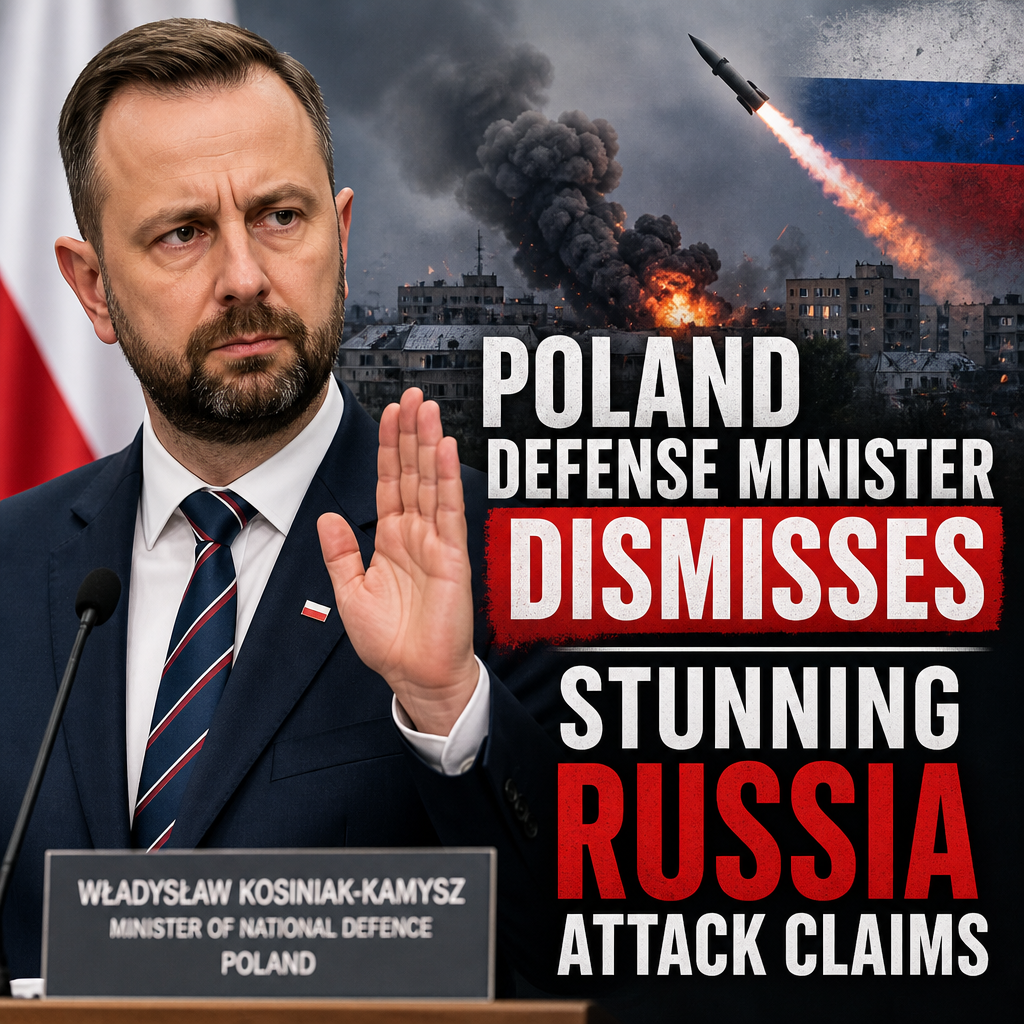
Poland defense minister dismisses claims of an imminent Russian attack as another reminder that Europe’s security debate is being shaped as much by information warfare as by troop movements.
The blunt response from Warsaw came amid renewed speculation about whether Moscow could open a new front or test NATO’s eastern flank. But the Polish minister’s reaction also points to a deeper reality: in the current climate, rumors of escalation can spread almost as fast as verified military developments, forcing governments to respond not only to threats on the ground but also to fears online and in the media.



Poland defense minister and the limits of alarm
At the center of the discussion is a familiar tension. On one side are warnings that Russia remains a strategic threat to NATO members bordering Ukraine and Belarus. On the other is the argument that some claims of a looming attack are overstated, poorly sourced, or politically useful to amplify anxiety.
Poland has every reason to treat Russian aggression seriously. Since the full-scale invasion of Ukraine, Warsaw has been one of Kyiv’s strongest supporters, expanding defense spending, strengthening its military posture, and calling for a tougher Western response to Moscow. That hard line is not the posture of a government taking security lightly.




Yet dismissing a specific attack claim does not mean dismissing the threat altogether. It suggests the government believes the particular allegation has not been backed by enough evidence to justify panic. That distinction matters. In security affairs, precision can be more responsible than drama.
A measured response may also be intended to avoid handing Moscow a propaganda victory. Russian officials and state-aligned outlets have repeatedly used threats, denials, and counter-accusations to shape perceptions around the war. When unverified claims are repeated too confidently, they can blur the line between warning and amplification.
What the broader coverage shows
Looking across international coverage, the picture is less about a single sensational claim and more about the competing ways outlets frame Russia’s intentions.
Some reporting emphasizes the seriousness of the threat environment, especially for countries like Poland, the Baltic states, and Romania. These governments sit on the frontline of NATO’s deterrence strategy and have increased military readiness precisely because they believe the risk of spillover or coercion is real.
Other coverage, including broader international reporting, tends to highlight the costs of escalation itself: how fear of imminent attack can fuel political pressure, defense spending, and public anxiety, even when concrete evidence remains limited. That perspective does not deny the danger; it argues that alarm must be proportional.
A third angle comes from outlets that focus on the information battle. In that reading, the most important issue is not whether an attack is hours away, but how quickly claims about war can be framed, circulated, and used to influence public opinion. That is especially relevant in a conflict where both battlefield facts and narrative control matter.
Taken together, these viewpoints suggest a cautious conclusion:
– Russia remains a genuine security threat to NATO’s eastern members.
– Specific claims of an immediate attack should be judged against evidence, not fear.
– Governments have an interest in avoiding both complacency and unnecessary panic.
– Information management is now part of national defense.
Why Warsaw’s response matters beyond Poland
Poland’s dismissal is important because Warsaw is not a neutral observer. It is one of the countries most exposed to any deterioration in regional security. If its defense leadership says a sensational attack claim does not hold up, that skepticism carries weight.
At the same time, the message is not that Europe can relax. Poland continues to argue for stronger deterrence, more ammunition production, better air defenses, and sustained support for Ukraine. In that sense, the government appears to be separating short-term rumor from long-term risk.
That distinction is wise. Europe’s security environment is still defined by a war that has already redrawn assumptions about borders, alliances, and military readiness. But the public debate can become distorted when every alarming claim is treated as equally credible.
This is where responsible journalism and responsible government communication overlap. If a report is uncertain, it should be labeled that way. If evidence is incomplete, that should be said plainly. And if a claim is part of a broader psychological or political campaign, audiences deserve to know that too.
The bigger lesson: skepticism is not denial
The strongest takeaway from Poland’s response is not that the Russian threat is exaggerated. It is that serious threats require serious scrutiny.
That may sound obvious, but it is easy to lose sight of it in a media environment built for speed. A claim of a Russian attack on Poland is the kind of story that can trigger instant reaction, especially in a region where the stakes are already high. But if the evidence does not support the claim, officials are right to say so clearly.
The most balanced reading is this: Poland is not downplaying danger, but it is resisting the temptation to turn every claim into certainty. In a Europe still shadowed by war, that kind of discipline may be just as important as military strength.